Due to the nature of these terms, I cannot give you visual examples. Instead, I have used examples from the films we have watched so far in class whenever applicable. At times, I have resorted to other film examples. If you need other examples, do not hesitate to ask.
A Few Basic Terms
story vs. plot
When analyzing narrative structure, it is important not to confuse story and plot. Plot refers to the events shown on screen; story includes the plot and any other important narrative events not shown on screen. For example, in Volver, we do not see any of the time Raimunda spent being raised by her grandmother; these years are referenced by various characters, but we do not see them on screen. These events are part of the story but not part of the plot.
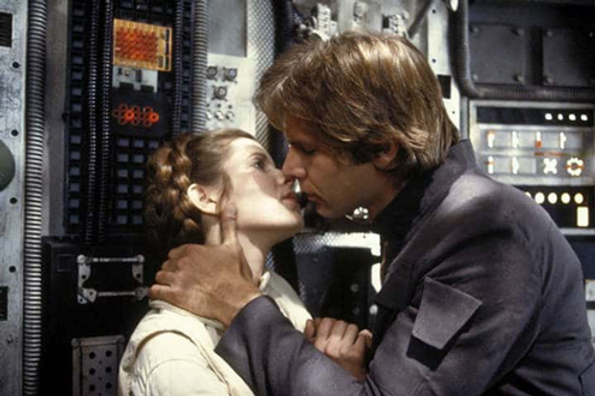
A subplot is a narrative string of events that is subordinate to the main plot. For example, in The Empire Strikes Back, the romance between Hans and Leia is a subplot.
In Shadow, the conflict between the Princess and Ping (and their eventual deaths) would be a subplot.
Parallel plots are when a film contains more than one major plot line or when plot lines run parallel to each other. This terms does not describe subplots, only multiple plot lines of roughly equal importance.
diegesis and nondiegetic elements
As discussed earlier in the semester, diegesis means story. A nondiegetic element in a film would be any aspect that gives narrative information but is not diegetic (for example, title cards inserted between shots to give information, used primarily during the silent era). A more modern version occurs when information is superimposed on an image, seen often when clarifying the time or place of scene. For example, in The Big Short, when the characters go to Las Vegas, we see the following image:
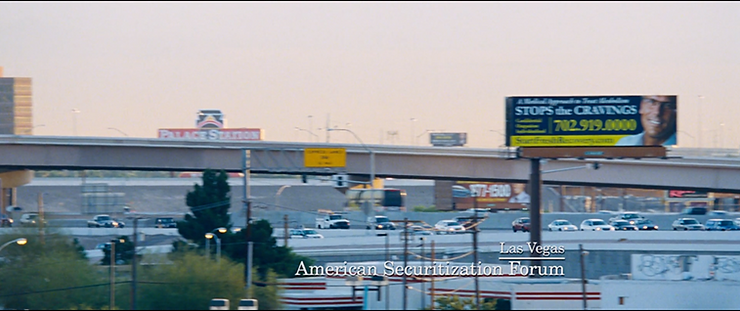
This more modern use is sometimes called a title over.
segmentation
Segmentation refers to the act of breaking a narrative down in to pieces or segments and analyzing how those pieces interact with each other. It is essentially what you will do on Quiz 5.
Narrative Form and Structure
Hollywood classical narrative structure
We will be using this term throughout this list, but we will not define it in full until near the end. By “Hollywood classical narrative structure,” we mean those qualities typical to the mainstream Hollywood film. One we have the appropriate terms covered, we will use them to define this idea in more detail.
Aristotle’s dramatic unities (action, place, time)
In his treatise on drama, the Ancient Greek philosopher Aristotle defined three “dramatic unities” involving action, place, and time. For Aristotle, a play should have one major plot line, with as few subplots as possible; the play should take place in one location; and finally, the play should unfold over a limited amount of time.
Film does not follow the second two unities very often, or at least not in a rigorous way. Films often use multiple locations, and the plot may cover vast amounts of time. However, some films try to follow Aristotle’s ideas such as Tarantino’s Reservoir Dogs, which takes please (except for an opening scene) in a single room over the course of a few hours. Kurosawa’s Yojimbo takes place in a village, in roughly the same space for the duration of the movie.
The unity of action is more closely followed in film, especially in Hollywood classical narrative structure. Many films focus on one plotline with subplots being clearly subordinate to the main thrust of the narrative, “The Woods” and “Barrier Device” being examples.
scene and sequence
“Scene” is like “genre” (see below): a term that seems simple but is surprisingly difficult to define. A scene is generally considered a continuous action that takes place in one location. It becomes complicated when we define “action” and “location.” For example, in the clip we saw from Goldfinger, Bond leaves the pro-shop and steps outside. Is this a new location and thus a new scene? I would argue no and that the lawn outside the pro- shop is an extension of the space of the scene. Plus, filmmakers may cut to other locations or flashback to another time without disrupting the scene (especially if these deviations are brief).
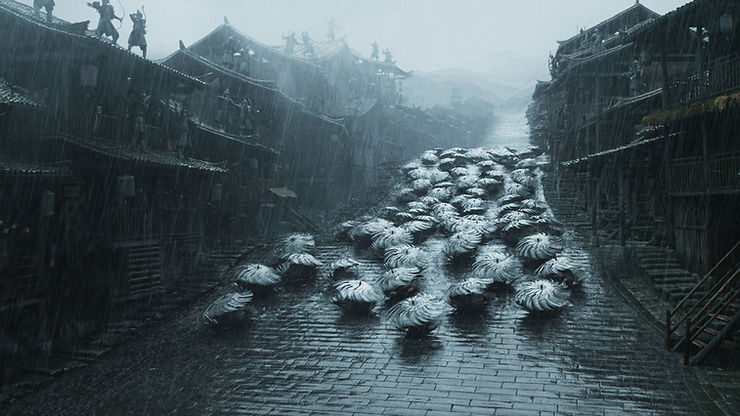
A sequence is a number of scenes that are connected (in terms of the action) and continuous (they follow one another). For example, in Shadow, we have a sequence that encompasses the attack on the city and Jing’s duel with Yang. Notice that Aristotle’s unities can be helpful here. Wikipedia defines sequence as a “series of scenes that form a distinct narrative unit, which is usually connected either by unity of location or unity of time” (“Sequence”). In the example from Shadow, the scenes that make up the sequence (somewhat) follow the unity of location (all of the scenes take place with the city, except for the crosscutting back to the Commander and Madam playing their duet) and time (the scenes directly follow one another chronologically or are happening concurrently). You could add the unity of action as well in that most often a sequence will have a singular purpose, for example showing the course of a key event (in this case, the various forces that will eventually lead to the taking of the city).
three-act structure
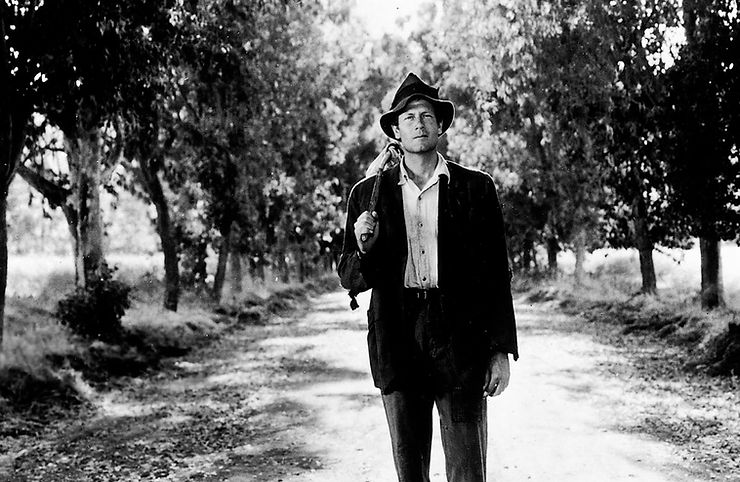
Many Hollywood films follow a three-act structure, meaning that the plot divides into three sections. The first section (which is often short) contains exposition, sometimes referred to as the “set up” (some sources will use the set up to refer to the entire first act). Exposition occurs when the film gives information necessary for the plot. It is often in the first act (especially in films that follow the Hollywood classical narrative model) that we learn the narrative intent of the film, the film’s central conflict or purpose. In Sullivan’s Travels, the first act introduces you to Sullivan’s and his desire to make a drama instead of a light comedy; this act is often short, which is the case in this movie.
During the first act, we may be exposed to what is often called “Chekhov’s gun.” The Russian playwright Chekhov said famously that if were was a rifle hanging on the walls of a set of one of his plays, it needed to be fired before the play was over. In other words, every major detail should have a purpose. Filmmakers use the term Chekhov’s gun to refer to how major plot elements may be introduced into the film’s narrative (usually during the first act) as being minor or barely noticed but turn out to be of great importance. For example, in the first act of Aliens, we learn that the protagonist Ripley can use a certain device; its seems like an inconsequential detail–just there to show that she is capable–until the last act, when she uses the same device to save Newt’s life. Here’s a good video on this concept:
The second act is the longest. It is the bulk of the movie and features a number of plot points (moments in a narrative when the action shifts or changes in some significant respect). Following the classic literary model, the second act is the rising action before the climax and the denouement in the third act. The second act of Sullivan’s Travels begins when he decides to venture out into the world as a homeless person. The plot points include meeting the Girl, getting arrested (twice), and finally put in prison.
The third act is also usually short (like the first act). It is here that the climax of the film occurs when the film’s narrative reaches a conclusion that answers key questions or resolves key conflicts. The Hollywood classical narrative structure creates closure, the feeling generated by the resolution of the plot. Closure does not require that all plot lines or questions be answered or that the ending be happy, only that the audience feels that the narrative has come to a close. The denouement refers to the “falling action” and describes the events of the narrative after the climax, as the film winds down, so to speak. In Sullivan’s Travels, the third act is when Sullivan confesses to his own murder and is released. The denouement occurs very quickly—on the plane back home, Sullivan shares his epiphany about the nature of comedy and his desire to make people laugh. We are granted closure with the knowledge that he has embraced his purpose in life and can not be with the Girl since his wife has divorced him.
Some films will deny closure to the viewer. This denial may be purposeful, as in The Graduate (1967) or Halloween (1978). Both of these films seem to end with the plot lines having been answered and the narrative come to a close only to “pull the rug” out from the audience’s feet, calling into question what we just watched. Some films may lack closure due to bad scriptwriting or direction (we will discuss a few examples in class).
causality and causal logic
Many films (particularly Hollywood films) are driven by cause and effect: one action causes the next action to occur. This kind of cause and effect can be referred to as causality. A film’s narrative can be called linear when it obeys a strict sense of causality or causal logic: one action leads to the next in a forward movement in time—A causes B which causes C which caused D and so on. A flashback or flashforward would be an example of a nonlinear element. Please note that flashbacks, while non-linear, are very common in Hollywood classical narrative structure.
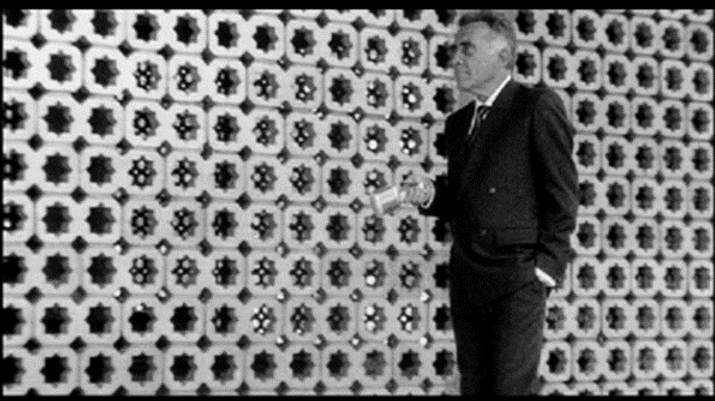
All of the films we have seen so far are linear in nature, with one action leading to the next, in a causal chain of events. One possible nonlinear element is in Women on the Verge (of a Nervous Breakdown), when we cut to the black and white scene in which Ivan walks down the line of women and sweet-talks each one. This scene seems outside of the linear narrative of the film. We will see some nonlinear examples when we watch experimental/avant- garde films.
Temporal duration
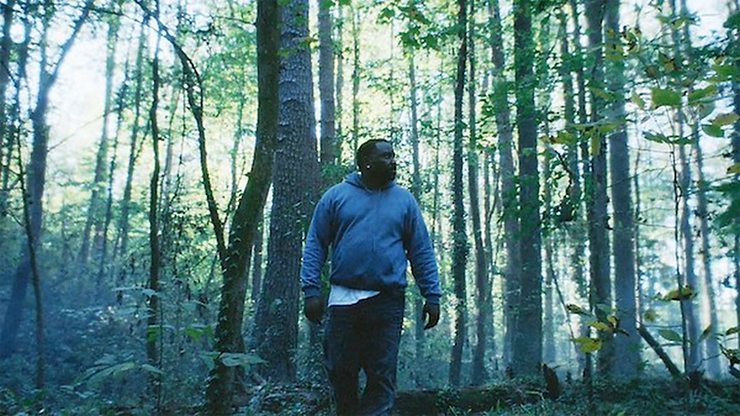
Story duration refers to the time span of the entire story, not just the events shown in the plot. Plot duration refers to only the events shown on screen. Screen duration refers to the time it takes to actually watch the movie. Bordwell and Thompson use North by Northwest as their example to explain the difference between these three terms. In this film, the protagonist stumbles upon a smuggling ring, which has been operating for years. He spends several days trying to escape the dangerous predicament in which he finds himself. In this way, North by Northwest “has an overall story duration of several years (including all relevant story events), and overall plot duration of four days and nights, and a screen duration of about 136 minutes” (80). “The Woods” has a story duration of about a year, a plot duration of about 16 hours, and screen duration of 25 minutes or so.
temporal order
Temporal order refers to the chronological order of the events. Is it linear or nonlinear? Is it an overall linear narrative with some nonlinear elements? On Quiz 5, do not call a film “nonlinear” if it has flashbacks but otherwise follows a linear order; instead, refer to the flashbacks as nonlinear elements.
Most films follow a chronological order, as do all our films so far this semester. A good example of a film doing something interesting with temporal order would be Pulp Fiction, in that the film scrambles the order of events; we see a character’s death and then (in the last third of the movie) revisit this character in an earlier part of the narrative.
temporal frequency
How often do we witness an event? The answer is usually only once, but some films play on temporal frequency by showing the audience an event more than once (sometimes from a different perspective). Temporal frequency does not refer to similar events happening (a montage of bad dates, for example) but to the same event reoccurring, that exact same moment in time being played out again.
A good example of temporal frequency is from Citizen Kane. Charles forces his second wife Susan to become an opera singer. We see her debut on stage from the perspective of the audience in the middle of the movie; near the end of the film, we see this debut again, but from the perspective of the stage. We see the same event twice, from different perspectives.
in medias res
In medias res refers to how narrative often start in the middle of the action. Many films begin with the events of the narrative already in play. For example, Star Wars begins with Leia fleeing the Empire after stealing the plans for the Death Star. Shadow begins in the middle of the plot to take the city and remove the King of Pei.
types of narrative patterns
At times, plots take on an identifiable pattern, one that is recognizable from many other films. The following are a few examples. This is not an exhaustive list but only a few examples.
- goal-orientated plot
When the plot is organized around the efforts of the characters to achieve one particular, specific goal. A goal orientated plot implies that this one goal structures the entire narrative, not just one part of the narrative.
- investigation plot
When the plot is organized around an investigation into some mystery or problem, such as in film noir or murder mysteries.
- deadline plot
When the plot is organized by a key and specific deadline. This deadline structures the entire plot, not just one sequence or scene, and the deadline must be clear and specific. For example, The Blues Brothers is structured around a deadline of paying off the mortgage of the orphanage to avoid foreclosure.
- journey plot
When the plot is organized around a physical journey from one place to the next. Importantly, “journey” is not used metaphorically here—it is a real physical journey. Of course, this journey can have symbolic meanings, but it still involves characters trying to get from point A to point B. Think of “road movies” as examples, such as Easy Rider or Little Miss Sunshine.
Remember that for a movie to have one of these types of plots, the entire movie needs to be structured in this way. If characters go on a short road trip for a brief period, we would not call it a journey plot since it does not structure the entire film.
framing (retrospective plot)
A retrospective plot is when the film is framed by the present while the rest of the film (other than the opening and closing) is set in the past. For example, in Saving Private Ryan, the film begins in the present when a soldier visits a graveyard. The rest of the film until the ending is an extended flashback of that soldier’s memories. The film ends by coming back to the frame of present day, with the solider in the cemetery. We would not refer to the movie within the frame as a flashback since it is the vast majority of the film. Shadow has a retrospective plot, with the film opening and closing with Madam at the door, in conflict about whether or not to open it and accept Jing as her husband and king.
As we think of narrative structure, it can be helpful to think about the space in which the narrative unfolds. At times, locations can take on an additional significance.
Historical locations are ones that are clearly set in another time, as indicated by mise-en- scene (costumes, set design, etc.) or other techniques (a sepia tone filter). This term would not be used to describe fantasy settings or settings in the future, only recognizable historical locations/time periods. We would not use this term if the movie is set in the same time period it was released. The clothes and cars of Sullivan’s Travels may seem old and emblematic of the 1940s, but the film was released during this time period; it was current day to the filmmakers and first audience.
Psychological locations have symbolism concerning the mental state of the character or characters. Films may use a location to represent the inner workings of the psyche. For example, in haunted house movies (a subgenre of the horror films), basements and attics may act as symbols of the sub or unconscious mind. In “Woods,” the forest could represent the mind, specifically the subconscious and unconscious.
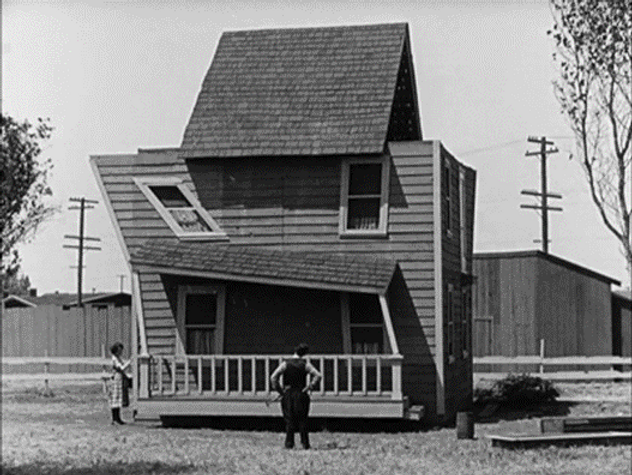
Ideological and symbolic locations also possess a deeper meaning. The difference between ideological and symbolic locations is that ideological locations point to a more political or social meaning. The home in “One Week” (see above) is an ideological location that symbolizes the pressure that Americans feel to achieve the “American Dream,” a pressure that can distort or destroy. In The Fog, the church becomes a symbol of both moral hypocrisy and redemption.
Characters
Classical Hollywood narrative are typically driven by character goals, desires, fears or needs, particularly the goals, desires, fears, and needs of the protagonist (the main character or hero of the film). Usually, the antagonist (the villain of the film or the character placed in opposition to the protagonist) attempts to block the protagonist from achieving his or her goals, creating character conflict. It is possible to have more than one protagonist or antagonist.
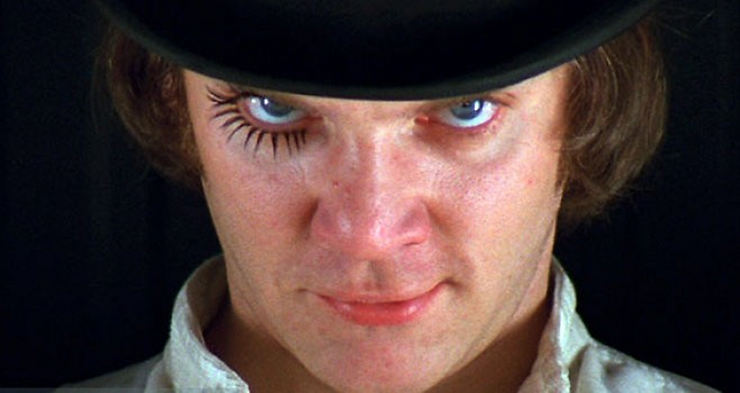
An anti-hero is when a character that lacks most or any of the traditional qualities of a hero occupies the narrative space allotted for the hero/protagonist. I have had students call Deadpool an antihero, but he still has many of the qualities we associate with heroes. Instead, think of a movie like Kubrick’s A Clockwork Orange. In that film, the “hero,” Alex, is despicable, and—importantly—he does not have a revelation that leads him to being a better person. Kubrick makes us sit through the movie, following Alex as he commits vile act after vile act. character traits Character traits are simply aspects that constitute or define a character’s personality. You should consider each of the films we have watched and think about how quickly and efficiently each one sets up the characters’ basic traits and personalities. character coherence (values, actions, behaviors) Character coherence is the idea that characters are (somewhat) predictable; they are a set of qualities (as shown through their values, actions, and behaviors) that makes sense on some level. This is not to say that a character cannot be complex or unpredictable, but these qualities should remain coherent. For example, a character may be contradictory and complex, but we (as an audience) understand the character as being such. At times, films will shock us by presenting new information about a character that changes how we
see their identity; this does not necessarily violate standards of character coherence but instead adds new elements to the character. In Volver, ’s actions can be unpredictable, but her character remains coherent since we come to understand the source or reasons for her actions.
An incoherent character is one that acts in a way that does not make sense, given what the films tells us about their identity (for example, a character acting in a way that does not fit with what we know about the character, and this change or the motivations for it are never explained). At times, this is due to bad scriptwriting. For example, after the first season, the television show Glee began to have a problem with incoherent characters; character motivation would seem to switch from episode to episode.
It is rare that films will use incoherent characters purposefully, but it does occur. Famously, in Scorsese’s Taxi Driver, the protagonist (a great example of an anti-hero) Travis Bickle presents a complex problem for the viewer. His actions do not make sense; his character does not seem to cohere. It goes beyond how we discussed Barry above; Travis does not have a fractured identity—the film refuses to give him one at all. The film confounds the viewer and challenges how we define identity and self.
divided character
A divided character has a strong internal division or conflict; these figures are grappling with choices and/or are deeply conflicted on some key issue. In “Barrier Device,” Audrey feels the deep conflict between her professional obligations, her masochistic need to learn about her ex-boyfriend, and her real desire for friendship.
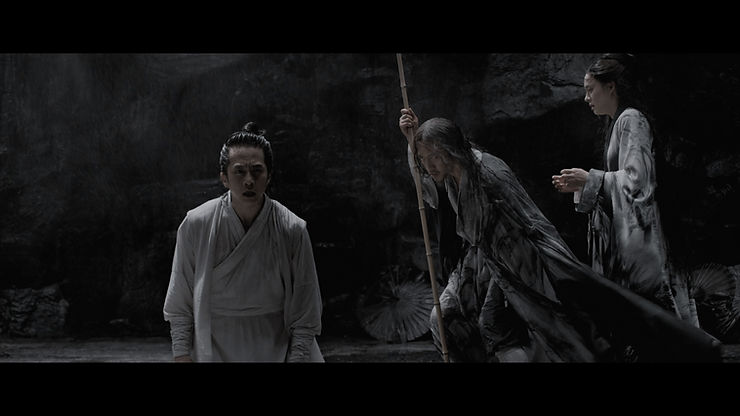
character doubling When two characters reflect each other in some way; they are “mirrored” in a sense. In Shadow, Jing and the Commander are clearly set up as mirrored doubles of each other, reflecting each other but also revealing key differences.
character depth
Character depth is the sense that a character is not flat but rather has subtle, complex and less predictable motivations and reasons for his or her actions (what Sharman calls being “round”). While they are coherent, it is harder to predict their actions. Audrey in “Barrier Device” or Alfred in “Woods” are round characters, while Blake (the ghostly captain in The Fog) is flat.
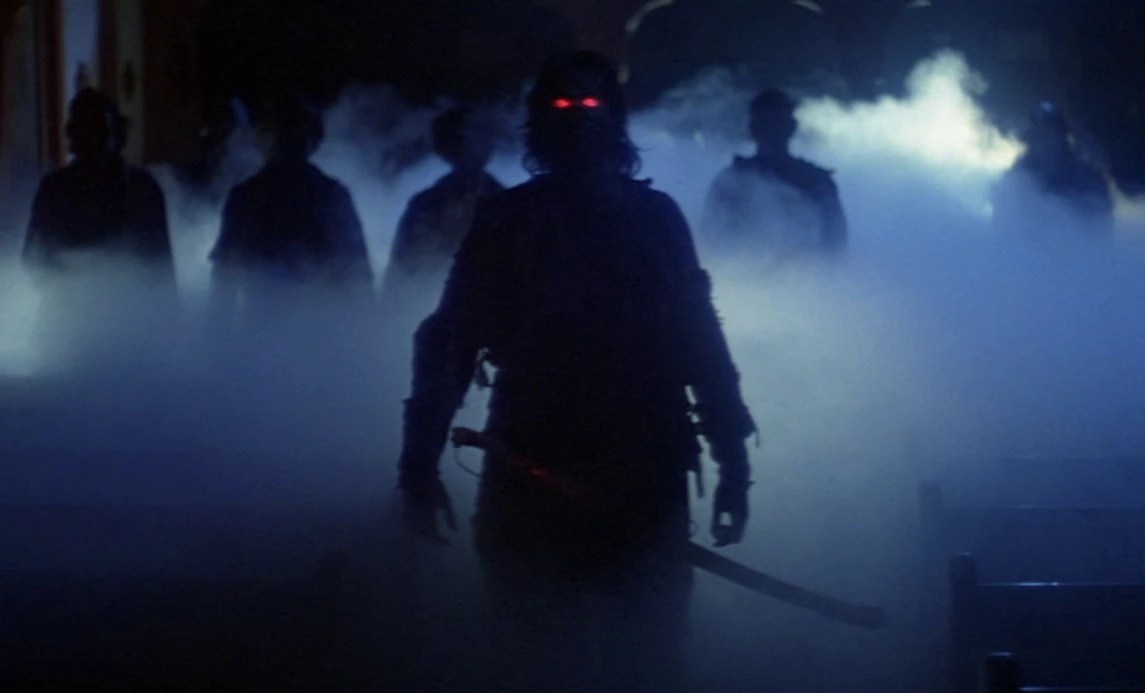
Flat characters can be seen as a flaw but can be an asset, given the needs of the movie. In The Fog, Blake’s singly-minded purpose and absence of emotional depth work to make him even more terrifying; he is more of a force of vengeance than a fully developed person. Most superheroes are flat characters, at least on a psychological level, but are much more interesting in terms of their mythic symbolism or sociological meaning. For example, Batman or Captain America are not deep characters—their motivations are fairly simply and obvious—but they tap into various societal issues that make him fascinating.
minor or secondary characters
Minor or secondary characters are characters that are not the protagonist or antagonist but play an important (although potentially small) role in the film; some will make a distinction with secondary characters being more important than minor characters. In The Fog, The weatherman who dies on the phone with Stevie is a minor character, while Sandy (the assistant who joins the main characters in the church) is a secondary character.
social hierarchies
Social hierarchies refer to the manner in which characters may be placed in relation to each other in terms of their power or social standing (or lack thereof). Shadow obsesses over social relations and who has power over whom. In Sulllivan’s Travel, Sullivan masquerades as a lower class person, but he finally truly experiences a shift in the social hierarchy when imprisoned.
typage or collective character
When a character represents an entire group or class of people, rather than a unique individual. For example, in silent Soviet cinema, a character may represent the working or wealthy class. In Battleship Potemkin, the individual sailor does not possess a unique personality as much as he represents the group as a whole.
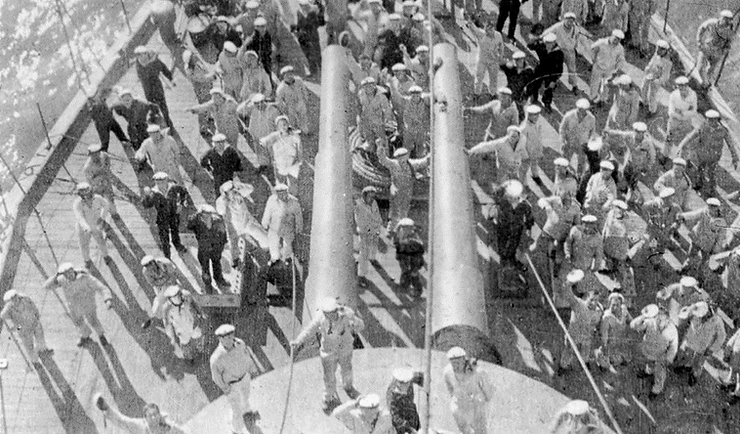
Character types are stock characters, often connected to a certain genre or subgenre of film (for example, the prostitute with a heart of gold in Westerns). Figurative types and archetypes are similar but separated by degree. Figurative types and archetypes are both symbolic characters. The difference between the two might be summed up as follows: figurative types are more culturally or historically specific while archetypes are more universal. You could argue that Blake is either a figurative character (representing how people thought of the disabled in the 1980s) or a more universal archetype (the figure of death or vengeance). Often, figurative types or archetypes are not deep characters, operating more as types or symbols than as fully imagined human beings.
character development In many films, especially in Hollywood classical narratives, the “through line” (the element that acts as a connective tissue throughout the entire film) is the development of the protagonist, how this character moves from one state to another, showing character development. This change can be external (an outer, physical change) and/or internal (a psychological, emotional, or spiritual change).
progressive development vs. regressive development
To decide whether or not the development of a character is positive or negative, look at the character’s goals and desires. Does he or she reach those goals? Do these goals bring about a positive or negative outcome for the character? Progressive development means that the character moves toward a higher understanding of his or her situation; they improve in some way, even if they do not reach their ultimate goal. Regressive development means that the arc of the character is one of decline, toward a negative result (even if they reach their goals). For example, a character’s goals may be to be the best piano player in the world; the film may end with him or her achieving this goal but by alienating everyone around them. If the film emphasizes the loneliness of this position, it would be an example of regressive development.
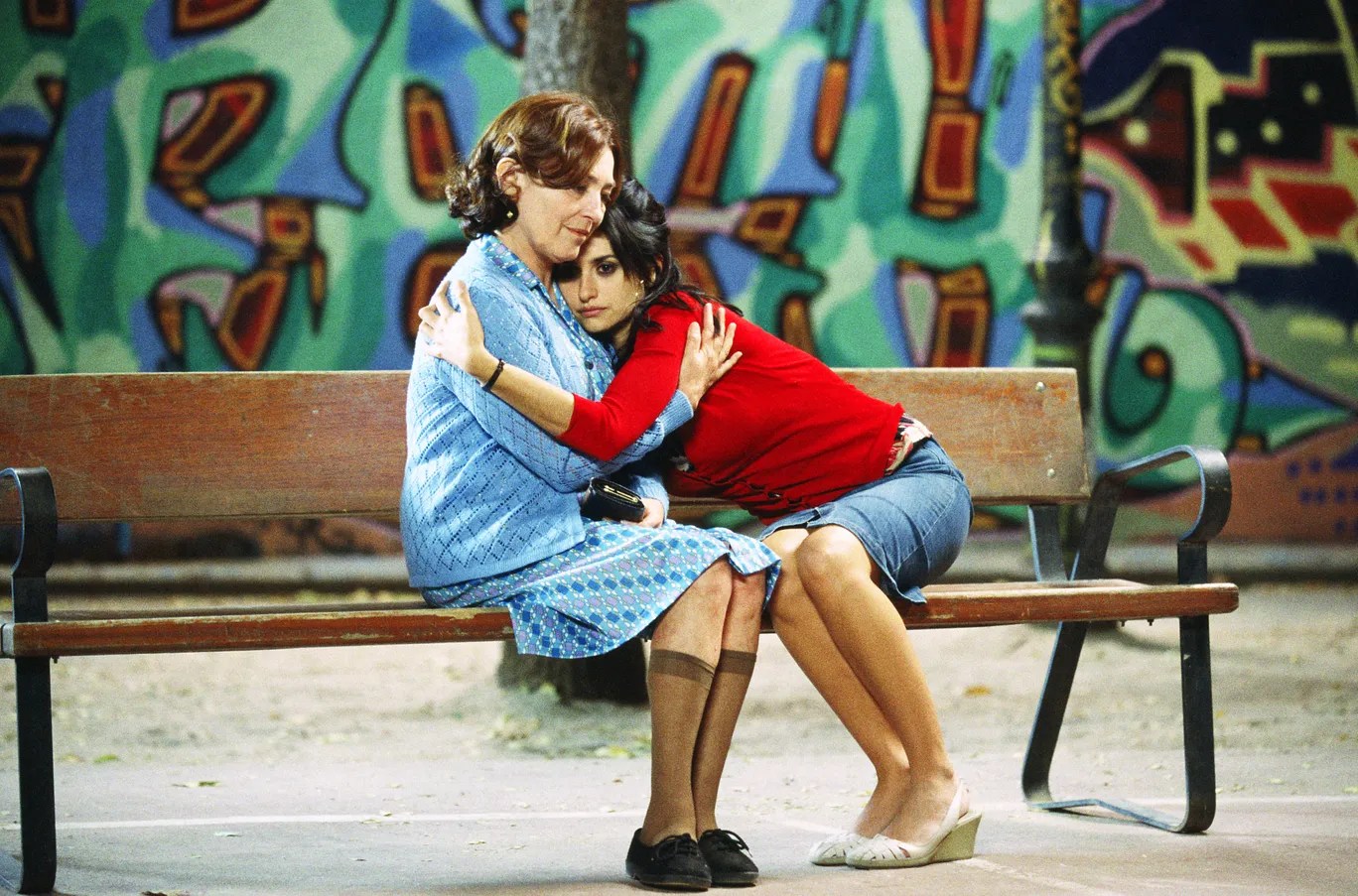
In Volver, Raimunda begins to take control of her life, showing progressive development even if it means confronting painful truths and memories of her past. The same could be said for Alfred in “Woods” as he survives his experience, although as we discussed in class his progress may be positive or negative, depending on how we interpret his final “selfie.”
Genre There is much critical discussion concerning what defines “genre,” but for the sake of brevity, we will define it as a classification or type of movie, based on the content, the style, and the anticipated effect of the movie on the audience. For example, horror films deal with frightening subject matter (centered around some sort of monster) and are designed to provoke fright (whether successfully or not). Horror films also share similarities in terms of style (low key lighting, for example).
Subgenres are more tightly defined groups within a genre (the slasher film, for example, as a subgenre of the horror movie). Mixed genres are when two genres combine (the action comedy, for example). Non-genre films are any films that do not fall into a genre or defy classification (Parasite, for example, is neither a comedy nor drama). conventions Conventions are any aspect of a genre particular to that genre. Conventions can apply to costuming, lighting, editing, narrative construction, characters, etc. For example, a narrative convention of the western is the shoot out as the climax of the plot. In terms of the films we have watched so far, The Fog and Shadow are the examples that are most clearly genre films, with the first being a horror movie and the second being a wuxia film.
formulas A formula is when a genre has a narrative convention that governs the entire plot; it is a narrative pattern conventional for this specific genre or subgenre. For example, the formula of the typical romantic comedy follows this pattern: two characters meet but are separated by some type of difference or conflict; they start to bond, despite the difference; a third party enters the narrative as a romantic rival; one member of the pair has to find a way to let the other person know his or her feelings for the other; the two are united, often with a deadline creating suspense (such as stopping a wedding before it is finished). The formula of the slasher film remains one of the most consistent. As shown by Vera Dika in her book Games of Death, the slasher film begins with a traumatic event that is either shown directly or alluded to by the characters; this event marks the place as “bad.” The film then jumps forward in time to show a group of teenagers who are going to the “bad place” to do “bad things” (drink, do drugs, have sex). These teenagers are killed off one by one, usually in order of the magnitude of their transgressions, until only one is left: a virginal, practical young woman called “The Final Girl” by Carol Clover. The Final Girl fights the slasher and kills the monster, although she may go mad in the process. Many (even most) of the slasher films of the 70s and 80s follow this formula. Narration This use of the word “narration” does not mean a voice over or someone telling the story (see the term “narrators” below); narration (in this sense) refers to how the film presents the plot to the viewer, the position in which it places the viewer. unrestricted/omniscient vs. restricted Restricted narration means that the film follows one character; we watch what this character does, and we only see other characters when they interact with the protagonist. Unrestricted film narration means that the film follows any number of characters and is not tied to one figure.
“The Woods” and “Barrier Device” are restricted; we only follow the protagonist. Volver, Sullivan’s Travels, The Fog, and Shadow are unrestricted or omniscient (to different degrees) in that we jump from character to character (with the latter two being far more unrestricted than the first two).
objective vs. subjective
Objective narration watches the action unfold from a neutral position; subjective narration puts us in the point of view of a specific character (for example, a point of view shot or subjective sound).
narrators
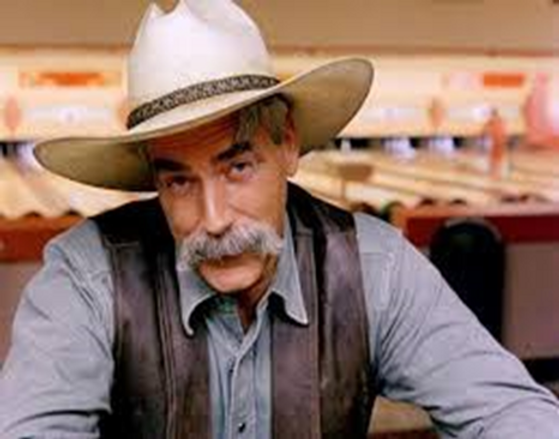
Of course, films may have direct narrators, usually in the form of a voice over that gives the audience information. As discussed in the sound chapter, these narrators can be diegetic (the voice of a character) or nondiegetic (the voice of someone outside the world of the story). A film such as The Big Lebowski merges the two into a semidiegetic narrator. In this film, a character narrates the action but does so by directly addressing the camera; he is the only one who does so, and no other characters interact with him—his only purpose is to occasionally appear as the narrator and talk to the audience about what is happening in the narrative.
Classic Hollywood Narrative Structure and Narration Fairly quickly—certainly by the 1930s—Hollywood filmmakers adopted (whether consciously or not) a kind of standard model for narrative form. Of course, it is important to note that there are many exceptions to these rules, but Hollywood films tend to have the following features:
Ø They are linear, although they often feature flashbacks, and they have a strong sense of causality/causal logic.
Ø They feature clear protagonists and antagonists. Ø They follow a three act structure.
Ø The first act uses exposition to clarify the goals, desires, fears or needs of the protagonist and thus the narrative intent of the movie.
Ø The plot is driven by these goals, desires, fears, or needs.
Ø The third act features a clear climax and a strong sense of closure.
Ø The narration is unrestricted and objective.
While it is important not to treat Hollywood as some kind of standard or as what defines the normal for cinema, it can be helpful to use the classic Hollywood narrative structure as a means to begin an analysis of your film. Try looking at your film and judging how it follows or deviates from this model.
Alternatives to the Hollywood Narrative Model
As stated above, it is important not to cast Hollywood as normal, especially given that other film cultures, especially Non-Western film narratives, do not share its model. When first encountering popular cinema from Hong Kong or China, many American audiences find the endings jarring and abrupt (this is especially true of the action films of the 1980s). The films of the great Japanese director Ozu differ from Hollywood’s norm; for Ozu, what happens next is not as important as what is happening how—while linear, his films are more concerned with individual scenes while Hollywood films seem obsessed with where that scene is leading. For this reason, I have had students who are accustomed to Hollywood films find his films an interesting and enriching experience, forcing them to watch film differently.
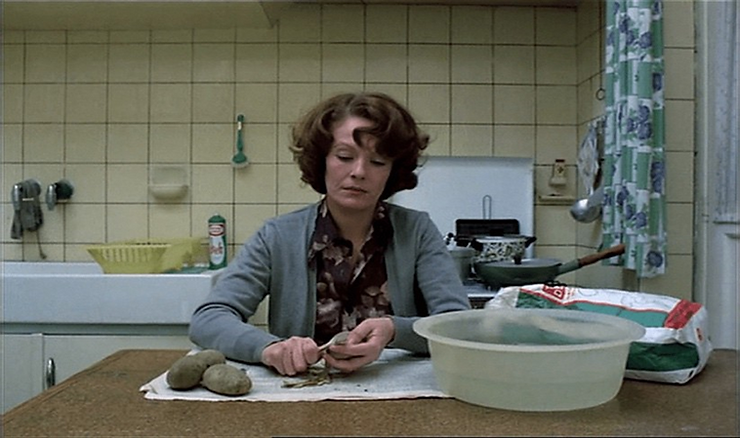
Within Hollywood and Western film culture in general, there has been a break from what is considered the norm, starting most radically in the 1960s. Many critics refer to the 1960s to the present as the postclassical period for film narratives. Films such as The Limey or Slacker break many of the rules listed above, sometimes in radical ways. Soderbergh’s The Limey fractures a sense of temporal order, cutting back and forth within the narrative. Linklater’s Slacker does not have a protagonist of any kind; instead, the film follows a series of people as the day progresses, leaving behind one and jumping to the next. Chantal Akerman’s film Jeanne Dielman does something simple but radical; a good part of its running time of 201 minutes is comprised of a woman making meals, forcing us to experience the drudgery of housework. These films could be called alternative film narratives. Please note that Hollywood films made before the 1960s were willing to experiment and break the norm. Citizen Kane (1941) as one of the most complex structures I have ever seen in a film; I maintain that the only way to fully understand it is to think three-dimensionally rather than two dimensionally.
narrative reflexivity
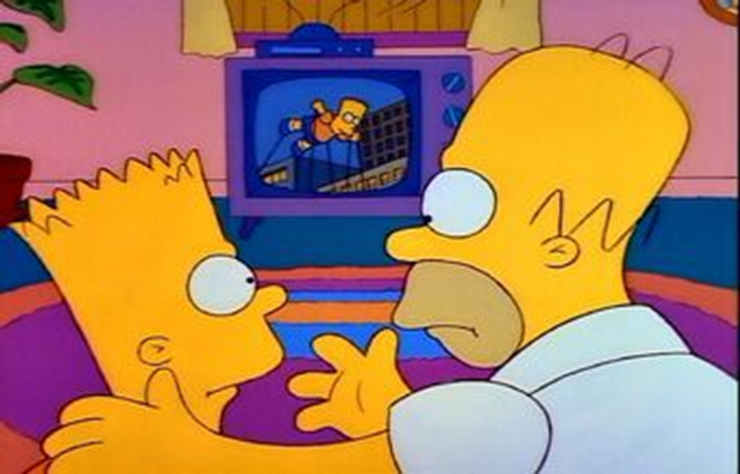
Narrative reflexivity refers to when a film calls attention to itself as a film. These moments can be labeled as “meta” in that the film reveals itself as a fictional work of art. The Simpsons plays with narrative reflexivity on a regular basis. In an early episode, Bart is watching the Macy’s Thanksgiving Parade and complaining about how it features balloons based on outdated or “flash-in-the-pan” characters; as he says this, a Bart balloon floats by on the screen. These moments are more common in postclassical/alternative film narratives.
unreliable narration
Unreliable narration is much more common in literature in film, for reasons we will discuss in class. Unreliable narration occurs when we realize that the film has been—in essence—lying to us; we have been shown events that may not have occurred or occurred differently than shown. While rare, this may happen when the film features a narrator describing past events; later, the film reveals that the narrator was lying and the events shown on screen were inaccurate or false. A film may be restricted to a character who is later revealed to be deluded or untrustworthy, and the film “plays along” by showing a view of the events that is shown to be unreliable. For an excellent example, consider the last sequence of Parasite. Like many viewers, I assumed that the final images were a montage, showing the son’s economic rise and not, as is revealed, his fantasy of rescuing his father. During this sequence, the film tricks us, offering up a happy ending, only to snatch it away, exposing it as unreliable narration.
Works Cited
Bordwell, David and Kristin Thompson. Film Art: An Introduction. 10 ed. New York: McGraw Hill, 2010. Print.
 Welcome to Introduction to Film